
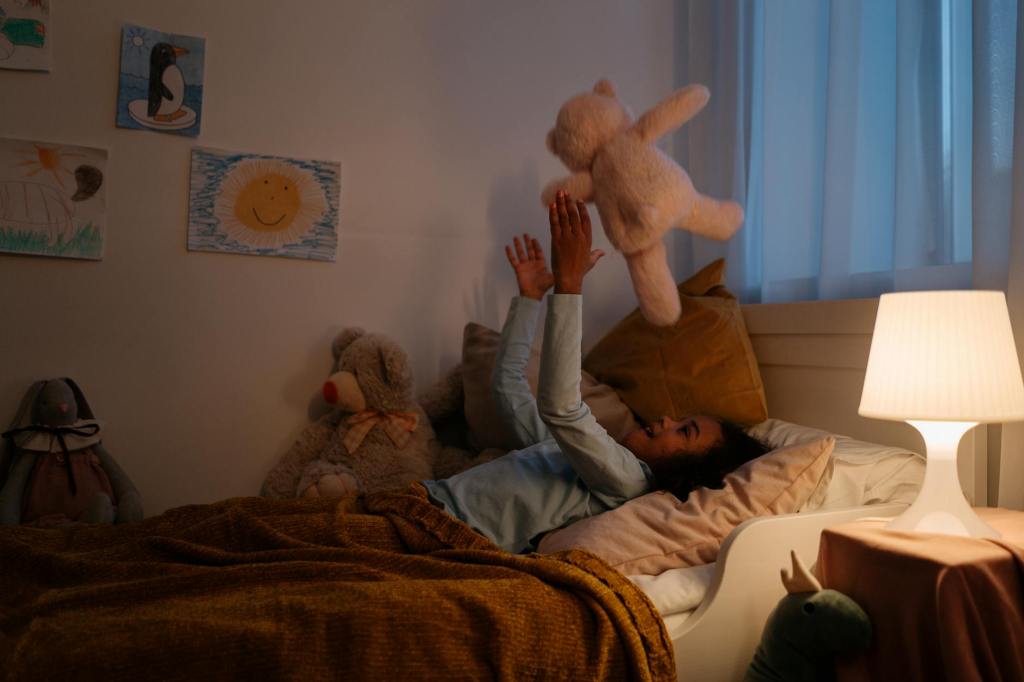
Sleep is an important parts of childhood development, and it’s also a common struggle families bring up in occupational therapy. A good night’s sleep helps children regulate their emotions, pay attention at school, participate in daily activities, and grow.
As occupational therapists, we often look at sleep through a holistic lens. Rather than just focusing on the moment your child closes their eyes, we consider routines throughout the day, sensory processing, and the overall sleep environment.
Common Challenges with Sleep
Children may struggle with sleep for many different reasons:
- Difficulty falling asleep: winding down after a busy day is hard for many kids
- Difficulty staying asleep: sensory sensitivities, difficulties with toileting, or difficulties with self-regulation can interrupt sleep throughout the night
- Challenges with routines: irregular schedules can impact the body’s natural rhythms
- Sensory needs: textures of blankets or PJs, background noises, or too much light may be overstimulating at bedtime
How OT Can Help
Occupational therapy can support sleep by:
- Looking at daily routines and patterns (mealtimes, activity levels, screen use)
- Supporting bedtime routines that are predictable and relaxing
- Exploring sensory needs that support or hinder sleep
- Adapting the sleep environment to optimize falling and staying asleep
Two Practical Tips You Can Try at Home
Here are a couple of simple strategies families can start with:
1. Build a Predictable, Calming Routine
Children thrive on predictability. A consistent bedtime routine signals to the brain and body that it’s time to wind down. This might look like:
- Participate in movement activities about 2 hours before bed, nothing too overstimulating, but heavy work activities or yoga are usually calming for kids
- Reading a favourite book together
- It’s important to also limit screen time for the 2 hours leading up to bedtime
- Have a light snack/drink, but not too much that the child might wake up in the night needing to go to the bathroom
- Taking a warm bath or shower
- Listening to quiet music or lullabies
- Sharing a snuggle or using calming deep pressure (like a massage, or a weighted blanket, if it feels good for your child)
The key is keeping the order the same each night. Over time, the brain begins to recognize these steps as cues for rest. Some kids benefit from using a visual schedule each night to guide the steps of the routine.
Please note, if using a weighted blanket, that the blanket should not exceed 10% of the child’s body weight, and the child should be able to remove the blanket independently. Please also be aware of the safety of any nearby siblings or pets.
2. Support Sensory Needs
Every child’s sensory system is unique, so experimenting with sensory strategies can help you find what feels most calming:
- Adjust the room temperature (slightly cool is usually most restful)
- Offer comforting textures, such as soft sheets, a favourite stuffed animal, a weighted blanket, or a warm bean bag
- Dim the lights or add a soft nightlight if total darkness feels overwhelming
- Try a white noise machine, fan, or calming music to reduce disruptive noises
- Eating a small, crunchy snack a few hours before bed (ex. carrot sticks, pretzels, etc) provides calming oral-motor proprioceptive input
The goal is to create an environment where your child’s body feels safe, comfortable, and ready to rest.
Final Thoughts
Sleep challenges can be difficult, and it’s important to remember you’re not alone in facing them. Occupational therapy can help families find strategies that fit each child’s unique needs.
If sleep is a concern in your household, consider reaching out to an OT for support in tailoring strategies to your child’s specific needs.
 Hand and Heart Kid's Occupational Therapy - London